AI in the Classroom: A 10-Point Bill of Rights for Schools
At the 2024 AI Connect K-12 Data Science Conference, Tracy Unified School District science teacher Michael Copass proposed 10 principles for AI in schools. They cover AI literacy, emotional deception, proof of effectiveness, transparent training data and parental opt-outs.
By The AI Enterprise Magazine Team4 min read
Key takeaways
- Students and parents are the client. Copass said the AI-in-education debate rarely includes the people who use the technology.
- AI literacy comes first. Everyone, including parents and teachers, needs to understand how chatbots are trained and what they do.
- AI is a servant. It should support critical thinking and creativity, never replace them or a teacher.
- Prove safety and effectiveness. Copass wants AI held to a standard like medication approval before classroom use.
- Go slow. He urged a stepwise rollout with informed consent and opt-outs for minors.
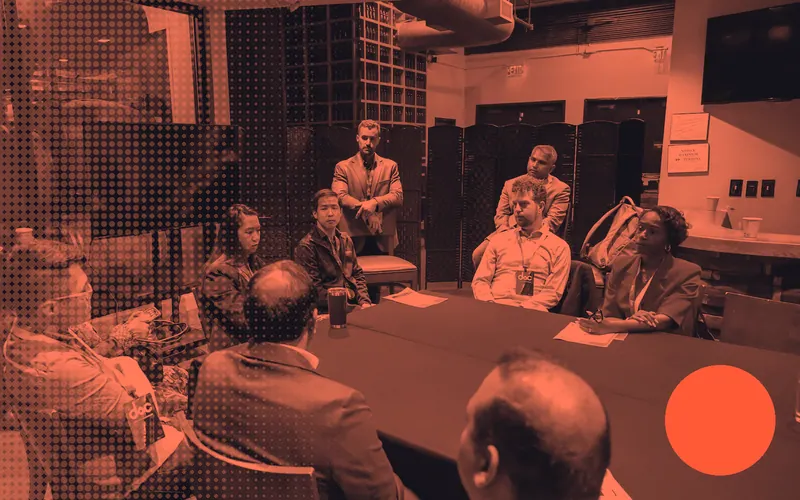
At the 2024 AI Connect K-12 Data Science Conference, a virtual event, Michael Copass, a science teacher at Tracy Unified School District, laid out 10 principles he said parents, students and teachers should demand before AI becomes routine in classrooms. Copass said he does not sell educational technology or analyze data. He described himself as "an advocate for the health and safety of children in the classroom."
His framework, which he first wrote up as a LinkedIn post, is loosely modeled on the Bill of Rights and built around what he called sustainable and ethical use of AI.
Why does a teacher want a bill of rights for AI?
Copass said the debate over AI in education has centered on the technology companies that build it and the education technology consultants who sell it. Students and parents, he said, are the end consumers and "the most important person in the room," yet they are rarely part of the conversation.
He pointed to social media as a cautionary precedent. He said he has had teens come to him anxious and isolated, some with stories of suicide attempts tied to social media, and asked whether the rollout could have been handled differently with more accountability. AI is not the same as social media, he said, but the past performance is enough reason to "do it right" this time, with guardrails and legislation with teeth.
Children, he added, cannot opt out the way adults can. A five-year-old is a minor without agency, he said, and they are "other people's children."
What should AI literacy and creativity rules look like?
The first principle on Copass's list was AI literacy for everyone: what an AI system is, how a chatbot is trained, what it learns from, and whether it has consciousness or simply predicts the next word. Because AI is changing quickly, he said, what was true a month ago is less true today.
He said schools should take the lead, proposing a weeklong effort to teach parents, teachers and students what they are dealing with if education technology vendors call their products transformative.
The second principle was that AI should be "employed only as a humble servant" of critical thinking and creativity. The student's creativity, writing and math skills come first, he said, and AI should never degrade them. He tied this to plagiarism and AI-written essays.
What does safe and effective AI mean for children?
Copass described three kinds of safety. The first is hallucinations and bias, which depend on what a model is trained on. The second he called emotional deception, since AI tools are "very good at telling you what you want to hear."
He warned that chatbots that are bland today could soon become friendly voices, then personalities, then avatars. Children lack the same prefrontal cortex development as adults, he said, and may be drawn into unhealthy relationships. His rule: "a machine should always introduce itself as a machine."
On effectiveness, he borrowed from drug regulation. A drug maker must show a medication is safe for populations such as children and effective before release, he said, and AI should face the same demand. For those who say AI advances learning, his response was "prove it," noting that the data science community is well placed to gather that evidence.
What about training data, the environment and teachers?
Copass named four more principles:
- Transparent training data. He said he does not know what is in OpenAI's training data and argued for a publicly funded, fully transparent data set to train a public educational AI.
- Published environmental cost. The carbon output of AI should be published and regulated, he said.
- No replacement of teachers. AI should never be placed in a classroom as a substitute for a teacher, special educator or teacher aide.
- Informed consent. Parents and students should know what they are dealing with and be able to opt out of AI lessons in favor of non-AI-dependent lessons, he said.
Education technology companies should be talking to parents, teachers and students, he said, not only to the superintendents they are trying to sell to.
How has his own view changed?
Copass said he started as "an absolute cheerleader" of AI. He recalled sending students "two by two as missionaries" to show other teachers how to use AI for lesson plans. The more he learned, he said, the more cautious he became, and he proposed a stepwise, graded rollout. His mantra: "go slow, go together and go far."
Where can educators keep following AI in education?
AI Connect, now AI Connect, runs events and webinars on data and AI. The AI Enterprise Conference 2027 takes place Tuesday, August 31, 2027, at Pier Sixty in New York City. AI Connect also lists 24 free live webinars on its 2027 schedule, and registration for 2027 events is coming soon. Details are at /events/ai-enterprise-conference/ and /webinars/.
Frequently asked questions
What rights should parents and students have over AI in schools?
Copass said they should have informed consent and the ability to opt out of AI lessons in favor of non-AI-dependent lessons.
Should AI replace teachers?
No. Copass said AI should never be placed in a classroom as a substitute for a teacher, special educator or teacher aide.
What is emotional deception in AI?
Copass used the term for AI tools telling users what they want to hear, a particular risk for children who may form unhealthy relationships with them.
How should AI in education be evaluated?
He argued AI should be shown to be safe and effective, similar to how medications must be before release.
This article is based on remarks by Michael Copass, Science Teacher, Tracy Unified School District at AI Connect K-12 Data Science Conference 2024 on July 25, 2024. More coverage: More AI Connect Events.
Filed under: AI Governance & Trust, People, Culture & Leadership