News · Data & AI Infrastructure
Micron Posts Record $41.5 Billion Quarter as AI Memory Demand Soars
Micron's fiscal third-quarter revenue more than quadrupled from a year earlier, beat its own guidance by more than $7 billion and came with a $50 billion forecast, a sign that memory is now one of AI's tightest bottlenecks.
By The AI Enterprise Magazine Team4 min readNews · Weekly briefing
Key takeaways
- A record quarter. Revenue reached $41.46 billion, up from $23.86 billion the prior quarter and $9.30 billion a year earlier.
- Guidance points higher. Micron forecast about $50 billion in fiscal Q4 revenue with a gross margin near 86%.
- HBM4 is shipping. HBM4 is in high-volume shipments for Micron's lead customer, and HBM4E volume production is expected in 2027.
- Costs flow downstream. Enterprises pay for scarce memory through AI servers, cloud instances and PCs, so cost monitoring and right-sizing matter more.
Week of June 22, 2026
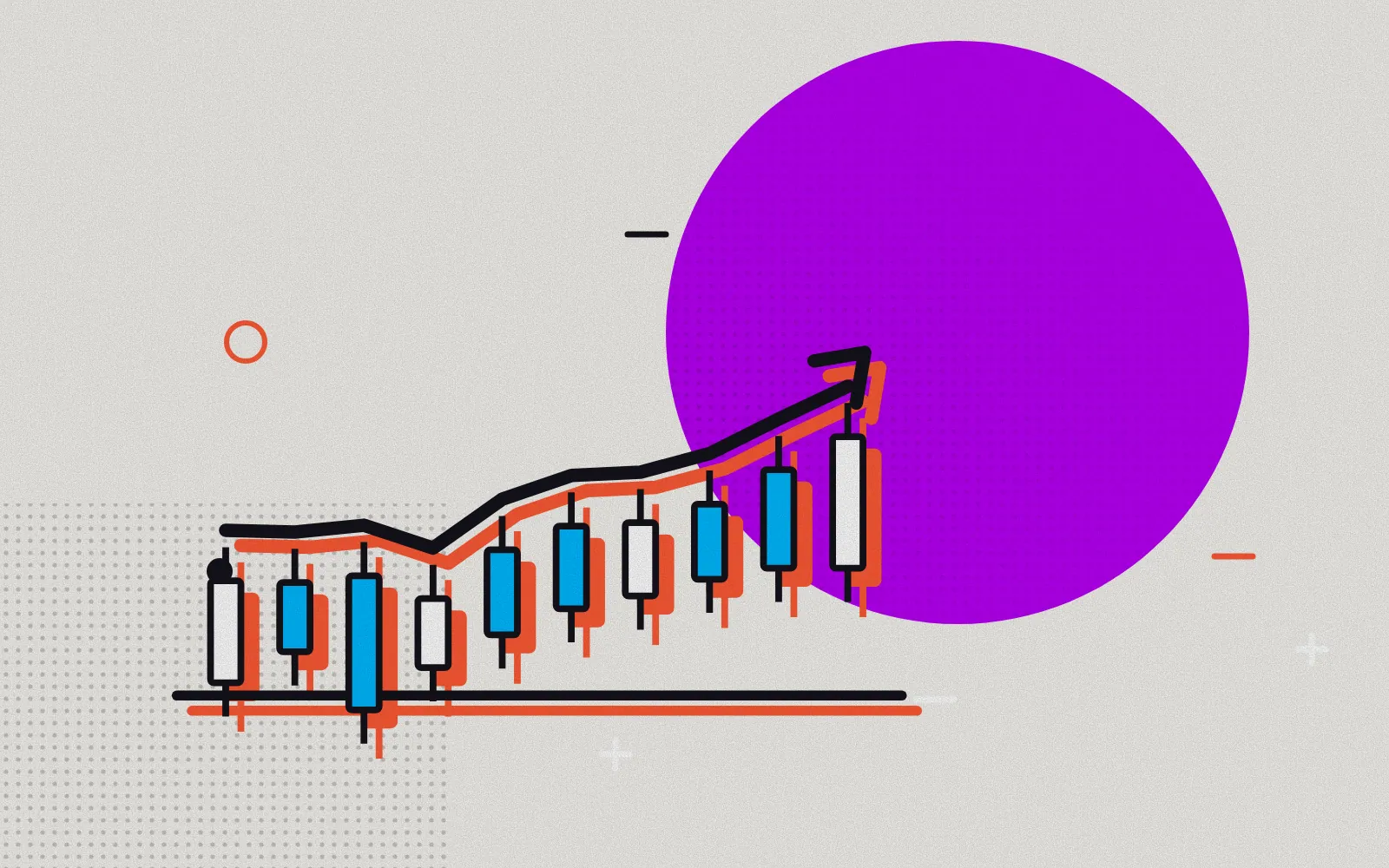
Micron's Quarterly Revenue Jumped From $9.3 Billion to a $50 Billion Forecast
AI memory demand lifted Micron's revenue to a record $41.46 billion in fiscal Q3 2026, and the company guided to about $50 billion for the next quarter.
View the data
| Micron revenue | |
|---|---|
| FQ3 2025 | $9.3B |
| FQ2 2026 | $23.86B |
| FQ3 2026 | $41.46B |
| FQ4 2026 (guidance) | $50B |
Micron Technology reported the largest quarter in its history on June 24, and then told investors the next one would be bigger. Revenue for the fiscal third quarter, which ended May 28, reached $41.46 billion, up from $23.86 billion in the prior quarter and $9.30 billion a year earlier, according to the company's results release filed with the SEC. For enterprise technology leaders, the numbers are a plain signal: memory has become one of the scarcest and most valuable parts of the AI stack, and that scarcity flows into what companies pay for AI servers, cloud capacity and even laptops.
What did Micron report for its fiscal third quarter?
The figures were striking even by the standards of the AI boom. Micron posted a non-GAAP gross margin of 84.9% (84.6% on a GAAP basis), GAAP net income of $28.24 billion and non-GAAP earnings of $25.11 per diluted share, the filing shows. Operating cash flow came to $25.39 billion, and adjusted free cash flow was $18.3 billion after $7.1 billion in net capital spending. The company ended the quarter with $30.2 billion in cash, marketable investments and restricted cash.
The quarter also blew past the company's own expectations. Going into the report, Micron had guided to revenue of $32.75 billion to $34.25 billion and a gross margin of about 81%, and the LSEG consensus estimate stood at $35.59 billion, IG noted in a June 23 preview. Actual revenue cleared the top of that guidance range by more than $7 billion.
For the fiscal fourth quarter, Micron guided to revenue of $50.0 billion, plus or minus $1.0 billion, with a gross margin of about 86% and non-GAAP earnings of $31.00 per share, plus or minus $1.00. Chairman and CEO Sanjay Mehrotra pointed to the company's "even stronger outlook for Q4" in the release.
Where is the demand coming from?
Micron now reports four business units, and all of them ran at very high margins. Cloud Memory, which serves the hyperscalers, brought in $13.77 billion. Core Data Center generated $11.52 billion, Mobile and Client $11.52 billion, and Automotive and Embedded $4.63 billion. Gross margins ranged from 79% to 87% across the four units.
High-bandwidth memory (HBM), the stacked DRAM that sits next to AI accelerators, remains the headline product. Micron said its HBM4 is in high-volume shipments for its lead customer's platform and that qualification samples have gone to several other customers. Its next generation, HBM4E, is well into development, with volume production expected in calendar 2027.
Local coverage from CNY Central highlighted the company's mention of strategic customer agreements meant to make long-term revenue more predictable. That suggests large buyers are locking in supply rather than relying on the spot market.
Why should enterprise AI leaders care about memory prices?
Most enterprises never buy an HBM stack directly. They pay for it indirectly, through GPU servers, cloud instances, managed AI services and the PCs and phones their employees use. When a single supplier's margins approach 85%, it tells you that buyers across the chain are competing for limited supply.
That has three practical consequences for 2026 and 2027 budgets:
- AI infrastructure quotes may stay high. Every AI accelerator ships with stacks of high-bandwidth memory, so tight supply reaches server buyers. Teams planning on-premises AI capacity or private AI factories should expect vendors to cite memory supply when pricing and scheduling deliveries. The AI Connect webinar on what an AI factory is laid out why sizing and utilization decisions matter more when hardware is scarce.
- Cloud AI costs need active management. Micron's Cloud Memory unit, which sells to the largest cloud providers, was its biggest segment this quarter. Leaders should watch whether that shows up in GPU instance pricing and reserved-capacity terms. At COLLIDE 2024, Lockton's Varun Tottempudi, Head of Data & Platforms Engineering, Global Analytics, warned that without monitoring, auditing and alerts, "in six months you might see a bill" as large as years of past spending. The same panel's advice on AI ROI and cloud costs applies directly.
- Device refreshes may cost more. Micron's Mobile and Client unit earned an 87% gross margin. IT teams planning AI PC rollouts should check how memory costs are moving in vendor quotes before committing to fleet-wide upgrades.
Efficiency work matters more in this environment too. Architectural choices that do more with less memory, such as caching, smaller right-sized models and faster data layers, become cost levers rather than engineering preferences. AI Connect speakers have made the case for high-performance data infrastructure as a cost play for exactly this reason.
What to watch next
The key question is how long this lasts. Micron is spending heavily on new supply, and its $50 billion guidance implies demand is still running ahead of capacity. Memory has historically been a cyclical business, with shortages followed by gluts once new fabs come online. Enterprises negotiating multiyear infrastructure deals this summer should keep that history in mind and avoid locking in today's peak pricing for longer than they need to. The next data points arrive when Micron reports its fiscal fourth quarter and when its HBM4E production timeline for 2027 firms up.
Frequently asked questions
How much revenue did Micron report for fiscal Q3 2026?
Micron reported $41.46 billion for the quarter ended May 28, 2026, with a non-GAAP gross margin of 84.9%.
What is Micron's outlook for fiscal Q4 2026?
Micron guided to revenue of $50.0 billion, plus or minus $1.0 billion, and a gross margin of about 86%.
Why do Micron's results matter to enterprises?
High-bandwidth memory is a core component of AI accelerators, so tight memory supply affects the price and availability of AI servers, cloud capacity and devices.
Sources
Filed under: Data & AI Infrastructure, AI Strategy & ROI