Event Guide · AI Strategy & ROI
How to Choose an AI Conference: A Guide for Enterprise Data and AI Leaders
Not every AI conference is worth a day out of the office. Here is a practical checklist for choosing the events that will move your AI program forward.
By The AI Enterprise Magazine Team3 min readEvent guide · Updated September 21, 2026
Key takeaways
- Start with the audience. Ask who attends, at what seniority and from which industries.
- Check the speakers' jobs. Enterprise practitioners describe what worked; vendors describe what is possible.
- Format matters as much as content. Roundtables and 1:1 meetings deliver more decisions than keynotes.
- Count total cost. A local $999 pass can beat a distant event once travel and time are included.
There are more AI conferences than any team can attend, and the agendas often sound alike. For enterprise data and AI leaders, the difference between a valuable event and a lost day comes down to a handful of questions you can answer before registering.
Who will actually be in the room?
The audience matters more than the agenda. Look for published figures on seniority and industry. An event where most attendees are Director level and above at large enterprises is built for different conversations than one aimed at developers or startups. For example, the AI Connect | Data Science Connect community is 100K+ data and AI professionals, seven in ten of them decision-makers, and attendees have come from 95% of the Fortune 500.
Are the speakers practitioners or vendors?
Read the speaker list for job titles. Enterprise practitioners, such as a chief data officer at an insurer or the head of AI at a retailer, tend to describe what worked, what failed and what it cost. Vendor speakers are useful for roadmaps but rarely cover trade-offs. The best events mix both and label them clearly.
Which format fits your goal?
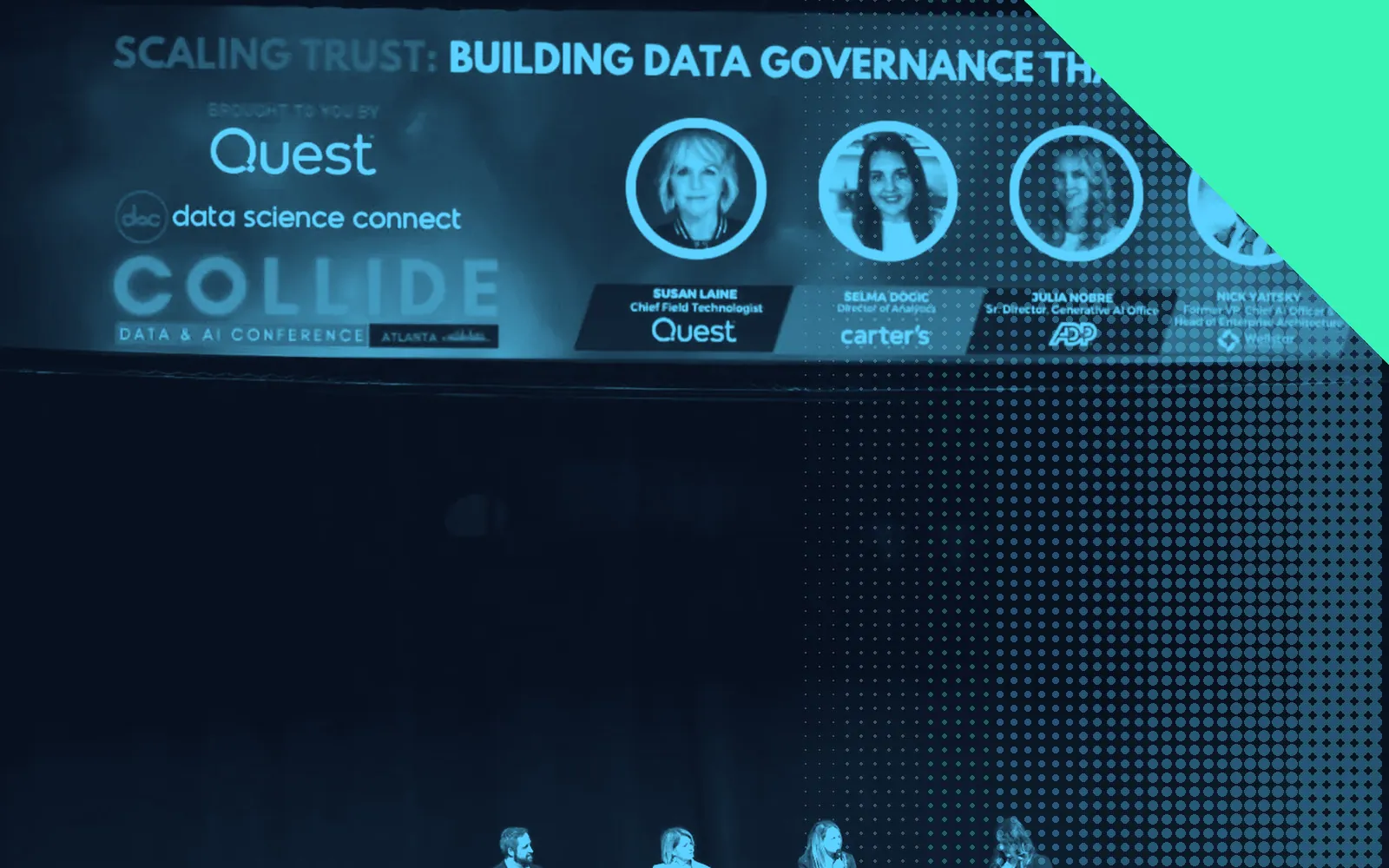
- Learning the market: a large trade show such as The AI Enterprise Conference (2,000+ attendees, August 31, NYC) or COLLIDE (1,000+, October 13, Atlanta)
- Solving a specific problem with peers: an executive summit with roundtables, such as the invitation-only ALIGN AI Executive Summits (about 125 Director+ attendees per city)
- Building relationships: an executive dinner of about 25 leaders, such as the AI Enterprise Executive Dinners
- Training a team cheaply: free webinars, which average 500+ registrations each
What will it really cost?
Add travel, hotels and time out of the office to the ticket price. A $999 trade show pass in your own city can cost less than half of a distant flagship once travel is included, and lets you send more of your team. Executive summits are often complimentary for qualified leaders; ALIGN, for example, is free by invitation or application, with general registration at $2,499.
How do you measure whether it was worth it?
Write down two or three goals before the event: a problem to solve, vendors to evaluate, peers to meet. Book meetings in advance, split the agenda across your team, and review results within two weeks. If an event consistently produces decisions, keep it; if it only produces swag, swap it out.
A simple rule of three
Most enterprise leaders get the best return from three event types a year: one platform conference for their core stack, one independent trade show for breadth and one executive-only series for depth. Membership communities such as the AI Enterprise Leadership Council can bundle the last two, with summit and dinner invitations and trade show passes for up to 10 team members.
Should you go to the same events every year?
Consistency has real value. Returning to the same executive series turns contacts into a network, and organizers get to know your priorities. But review the list each year: if your team's focus shifts from infrastructure to governance, or from data platforms to agents, your calendar should shift with it.
Frequently asked questions
What should I look for in an AI conference?
Look at who attends, the seniority of the audience, whether speakers are enterprise practitioners, the format (keynotes, roundtables, one-to-one meetings) and the total cost including travel.
Are vendor conferences worth attending?
Yes, if your stack depends on that platform. Pair them with independent events that show how other enterprises use a range of tools.
How do I measure the ROI of attending an AI conference?
Set goals before you go, such as peers met, vendors evaluated or problems solved, and review them within two weeks of the event.
Filed under: AI Strategy & ROI, People, Culture & Leadership