Demystifying Generative AI: ChatGPT, LLMs and Career Advice
In the closing panel of the 2024 AI Connect K-12 Data Science Conference, practitioners from Meta, Chegg, Pella and Asics Digital explained generative AI, LLMs and ChatGPT. They covered prompt engineering, hallucinations, RAG, learning to code with AI and the skills students will need.
By The AI Enterprise Magazine Team4 min read

Key takeaways
- Three terms, three layers. Generative AI is the broad category, LLMs are one method, and ChatGPT is one LLM application.
- Context improves prompts. Larson said richer prompts work better than one- or two-word requests.
- Verify what AI says. Mink defined hallucinations as confident wrong answers and described RAG as one way to reduce them.
- Fundamentals still matter. Prakash said the future coding language may be English, so statistics and problem solving become the core skills.
- Human skills rise in value. Jain named critical thinking, emotional intelligence, adaptability and ethical reasoning.
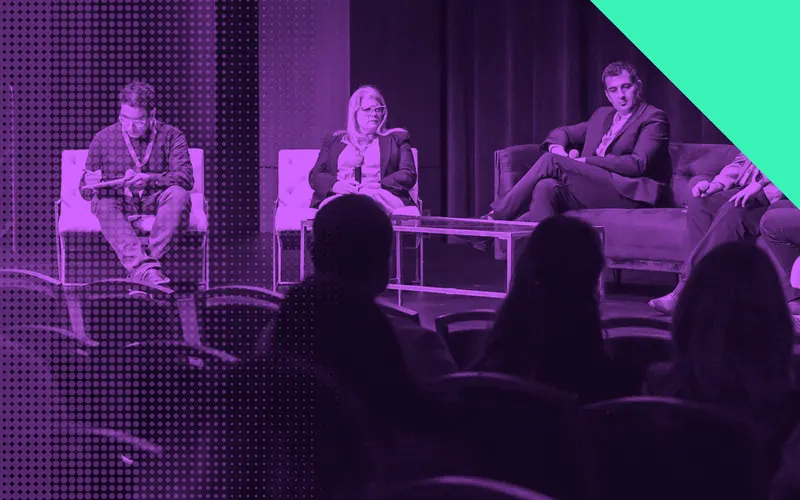
At the 2024 AI Connect K-12 Data Science Conference, a closing panel of data practitioners explained what ChatGPT, generative AI and large language models are, how students can use them to learn, and which skills will matter as the technology spreads. Brian Mink, co-founder and president of AI Connect, moderated the virtual discussion with Jai Prakash of Pella Corporation, TJ Sizemore of Asics Digital, Anshul Jain of Meta, Anthony Dicecco of Chegg and Jessica Larson, formerly of Instacart and Pinterest.
What are ChatGPT, generative AI and large language models?
The panelists separated three terms that are often used interchangeably. Jain described generative AI as the broader category, which creates new text, images, music or video. Large language models, or LLMs, are one way to achieve it, he said, and ChatGPT is one application of LLMs built for humanlike conversation.
Larson contrasted generative AI with earlier AI, which she said was mainly used for making decisions and sorting things into categories. Generative AI breaks out of that by producing new output. Under the hood, she said, AI is "fancy statistics," a massive network making connections that look like understanding.
Mink added that OpenAI did not invent generative AI or LLMs. What made ChatGPT stand out, he said, was the sheer volume of data it was trained on, which he described as "basically the entire internet," and its skill at predicting the next word in a sentence. He noted that training at that scale takes large amounts of energy, water and servers.
How do you get better answers with prompt engineering?
Mink said ChatGPT outputs can turn generic quickly, such as social media posts that all look alike, but better prompts help. Larson described prompt engineering as trial and error to learn what works for a given model, with enough context being the key.
She used a test-taking analogy. People do well on multiple choice because the options help them search memory, and they struggle with open-ended questions that give fewer cues. A prompt of 25 well-chosen words, she said, works better than a one- or two-word prompt.
Jain said models are getting better at keeping context, so users can say they meant something else without retyping the whole prompt. Dicecco said users should understand a model's limits. Asking it for something new is different from asking for a fixed factual answer, which can lead it to hallucinate.
What are hallucinations and how can they be reduced?
Mink defined a hallucination as a confident wrong answer. The model is only predicting the next word, he said, and the internet contains plenty of wrong information.
One mitigation is retrieval-augmented generation, or RAG, in which the model is pointed to a specific data set and told to pull answers only from it. He used legal cases and statutes as an example. It does not fully solve the problem, he said, but it makes answers more accurate. Without a data science background, users can approximate this in ChatGPT by supplying documents and asking it to draw only from them.
Can students use ChatGPT to learn data science and coding?
Panelists said yes, with caution. Larson recalled similar debates over the internet and Wikipedia and said the lasting lesson is verifying information. She suggested using generative AI to summarize messy code, then searching key phrases on sites like Stack Overflow. She cautioned: "I would not copy and paste anything that you don't totally understand."
Sizemore said no data scientist writes code with no outside help, so ChatGPT is a way to work more efficiently, but "nothing is copy and paste." Dicecco suggested pasting in error messages and prompting again to fine-tune the code.
Mink recommended asking ChatGPT to suggest certifications, courses or conferences matched to your goals and current Python level. Prakash said it is "very likely that the future coding language is English," so students should focus on statistics, problem solving and basic algorithms such as clustering and linear regression. Mink agreed that fundamentals matter more than tactical details.
What skills and applications did the panel predict?
Jain expects more personalized education, with LLMs serving as tutors. For skills, he named critical thinking, emotional intelligence, adaptability and ethical reasoning. He also pointed to role-playing, such as rehearsing a conversation with a manager about a raise.
Prakash pointed to personalized medicine and a wave of AI startups. Larson named accessibility, such as summaries pitched at a reader's level. Sizemore picked gaming, including non-player characters. Dicecco cited a level playing field. Larson, a self-described skeptic, said she does not expect computers to develop emotion and urged students to question sources, noting that photos stopped being proof long ago and video and audio can now be faked.
Mink closed by saying ChatGPT is not the final answer but is often better than the alternatives people had before.
Learn more with AI Connect
For continuing education on generative AI, AI Connect hosts 24 free live webinars on its 2027 schedule, in four series: the AI × Enterprise Panel Series, AI Demo Days, Agentic AI Showcases and the Plug & Play Series. See the webinars page for details. Registration for 2027 events is coming soon.
Frequently asked questions
What is the difference between ChatGPT, generative AI and LLMs?
Panelists described generative AI as the broad category that creates new content, LLMs as one method for doing it, and ChatGPT as one chatbot application of LLMs.
What is an AI hallucination?
Moderator Brian Mink defined it as a confident wrong answer, produced because the model is only predicting the next word.
How can you reduce hallucinations?
Mink described retrieval-augmented generation (RAG), which points the model at a specific data set to pull answers from. It improves accuracy but does not fully solve the problem.
Can students use ChatGPT to learn coding?
Yes, panelists said, for explaining messy code, suggesting courses and fixing errors, but they advised verifying results and not pasting code you do not understand.
This article is based on remarks by Jai Prakash, Pella Corporation (leads data, analytics and data science); TJ Sizemore, Director of Analytics, Asics Digital; Anshul Jain, Data Science, Meta; Anthony Dicecco, Finance Analytics, Chegg; Jessica Larson, formerly of Instacart and Pinterest; Brian Mink, Co-founder and President, AI Connect (moderator) at AI Connect K-12 Data Science Conference 2024 on July 25, 2024. More coverage: More AI Connect Events.
Filed under: AI Use Cases & Applications, People, Culture & Leadership