



AI governance and data science freedom don't have to conflict. At COLLIDE 2025, SAS's Sophia Rowland and Sundaresh Sankaran showed how governed synthetic data generation protects personal information, produces representative and robust data sets, and is measured for both similarity and disclosure risk.
Key takeaways
- Governance builds trust with regulators, consumers and top talent, and Rowland called it a competitive advantage.
- Stripping PII can hurt models. Attributes such as biological sex carry real relationships to outcomes, as with heart attack symptoms.
- Test for the extremes. Robust test data covers edge cases, missing values and out-of-bounds inputs before production.
- Layer the protections. Sankaran described excluding columns, semantic types and differential privacy, which trades off some accuracy.
- Measure disclosure, not just similarity. Good synthetic data matches source correlations while keeping reidentification risk low.
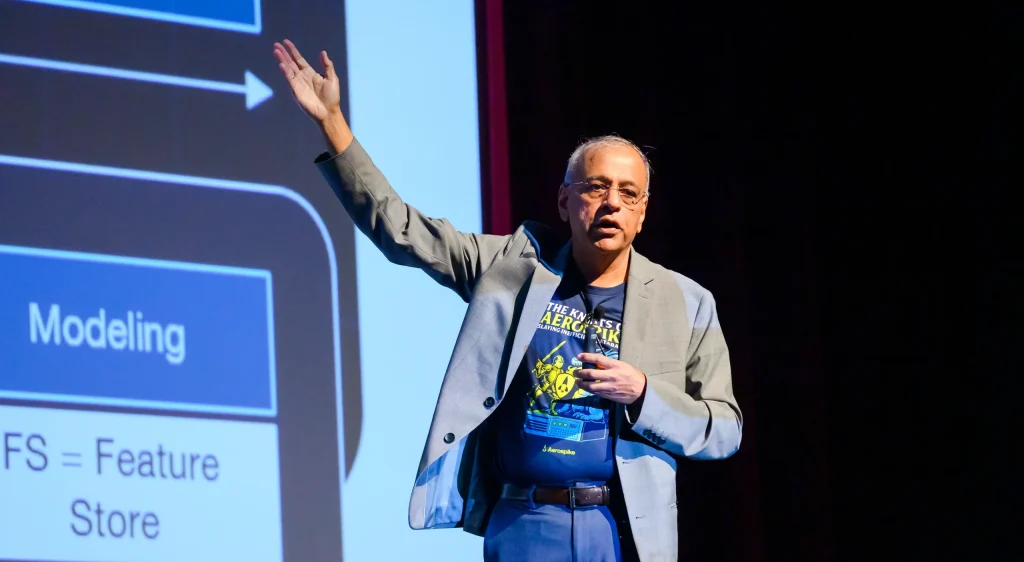
Synthetic data can give data scientists the freedom to experiment while keeping AI governance intact, SAS Senior Product Manager for MLOps and AI Governance Sophia Rowland and Senior Solutions Architect Sundaresh Sankaran told attendees at COLLIDE Data + AI Conference 2025 in Atlanta, in a session sponsored by SAS. The pair framed the talk as a dialogue between a governance lead who wants trustworthy AI and a data scientist who wants room to work.
Why does AI governance start with trust?
"I cannot start my discussion on AI governance without starting on trust," Rowland said. She named three groups that organizations need to convince.
The first is regulators. Rowland pointed to a growing number of AI regulations and standards, including the EU AI Act, which she said carries non-compliance penalties of up to 35 million euros. The second is consumers and end users. "AI governance is a competitive advantage," she said, because companies that can explain how their AI is used, updated and managed build trust. The third is top talent, which she said wants to see AI built and used responsibly.
Sankaran pushed back from the data scientist's side. Strict practices can leave data sitting unanalyzed because of usage restrictions, he said. "I need a bit of chaos in my life. I like that freedom."
How can teams protect PII without losing useful data?
Rowland described two data challenges that affect trust in AI: protecting personally identifiable information (PII) and building representative, robust data sets.
PII includes any information that can be used or combined to identify an individual, and leaking it can bring penalties and lost consumer trust. But simply stripping every identifying field can harm the model, she said. In health care, outcomes are related to sex, race, gender, age and even ZIP code. Heart attack symptoms differ between men and women, for example, and removing biological sex would lose that relationship.
Synthetic data offers a middle path, according to Rowland. It can preserve the relationships teams need while making it hard to reidentify the individuals in the source data, so the data can be shared internally with data scientists.
What makes training and test data representative and robust?
A representative data set reflects the population a model will be applied to, which helps accuracy, Rowland said. A robust data set covers what could go wrong: edge cases, out-of-bounds values, unseen values, missing data and extremes.
She compared it to buying a car and assuming the automaker tested it in rain, snow, fast stops, highways and city streets. Models need the same treatment, she said, so teams understand when a model fails and can adjust before it is used for decision-making. Synthetic data can produce both a training set that mimics the target population and a test set full of edge conditions.
How does governed synthetic data generation work?
Sankaran walked through a SAS application that organizes synthetic data work into projects. Projects are reusable and carry metadata that provides traceability, he said, and metadata-based search helps teams find a project to improve it or answer regulators.
He stressed separation of roles, permissions and data. Connectors to source and target environments keep synthetic data from contaminating where the original data resides. An automatically derived entity relationship diagram maps the data assets, but teams should check table types: transactions are sequential, accounts are point-in-time snapshots, and reference tables such as branch lists are meant to stay as truth, not be synthesized.
Sankaran described three opportunities to protect data:
- Exclude columns from training, which he called a weak form of protection
- Use semantic types to generate realistic but synthetic IDs, names, addresses and phone numbers
- Apply differential privacy when training the generator, adding random noise so specific source patterns don't carry through
"A generator is just a fancy word for a machine learning model," he said, one that can produce data on demand into the future. Differential privacy is one of the strongest privacy methods, according to Sankaran, but it trades off accuracy, so governance should let teams run multiple iterations and choose a version objectively.
How do you know if synthetic data is good enough?
Similarity to the source data only partly answers that question, Sankaran said. Teams should also look at disclosure metrics, which measure the risk of revealing information about source data. Quality checks should cover individual columns, correlations between pairs of variables within and across tables, and fidelity of time-series data.
"It's a bit over ambitious to assume that you will get things right the first time around," he said. Teams should record iterations to demonstrate effort and keep only the ones that move in the right direction. Data consumers, who may not have built the generator, should be able to request synthetic data as a service by specifying volume, format and destination.
Rowland summarized the demo, in which a bank used synthetic consumer data to model propensity for marketing campaigns. The synthetic data was more representative and reduced PII exposure. "Better security, better predictions," she said.
Discuss AI governance at COLLIDE 2027
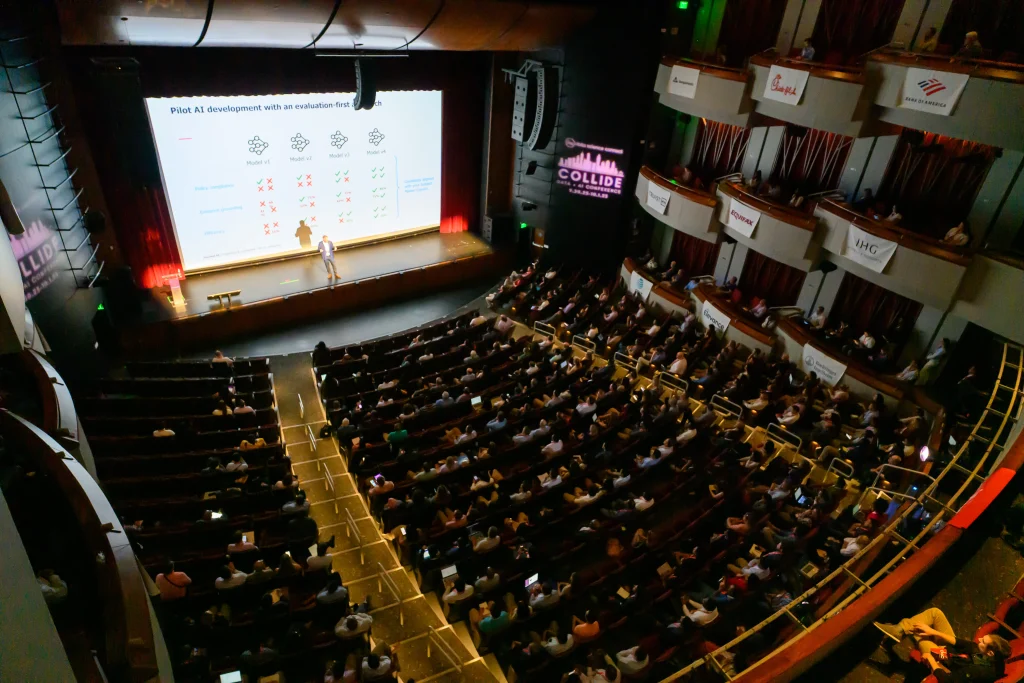
COLLIDE, the largest AI conference in the Southern U.S., brings more than 1,000 enterprise data and AI leaders to Atlanta for sessions on governance, privacy and responsible AI. The 2027 conference takes place Wednesday, October 13, 2027, at the Sandy Springs Performing Arts Center. Find details at COLLIDE, and look for governance topics in Data Science Connect's free live webinars.
Frequently asked questions
How does synthetic data help AI governance?
Rowland said it preserves relationships in the data while making it hard to reidentify individuals, so teams can share data internally and test models without exposing PII.
What is differential privacy in synthetic data generation?
Sankaran described it as adding random noise during generator training so specific source patterns don't carry into synthetic data, at some cost to accuracy.
How do you evaluate synthetic data quality?
According to Sankaran, teams should check similarity to source data, including column distributions and correlations across tables, along with disclosure metrics that measure reidentification risk.
Why not just remove all personal data before training?
Some personal attributes are linked to outcomes. In health care, for example, heart attack symptoms differ by biological sex, so removing that field loses important information.
Watch: AI Governance in Practice: How Synthetic Data Prepares You for What’s Next on YouTube
Event: COLLIDE AI Conference · More coverage: COLLIDE AI Conference insights